








The following article is solely the opinion of the author and does not reflect the views of his employer.
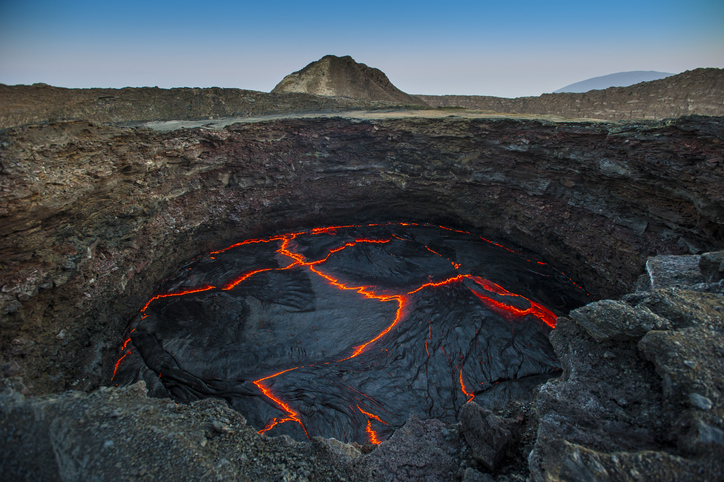
On November 23, 2025, the Hayli Gubbi volcano in Ethiopia reported its first recorded eruption, emitting over 220,000 tons of sulfur dioxide. High-altitude winds pushed the resulting ashfall as far as Northern India, leading to the delay or cancellation of more than a dozen international flights. According to the local authority, settled ash made it difficult for local livestock to find clean grass and water. As human settlement expands into remote regions and global air traffic increases, events like this highlight important questions about whether existing catastrophe frameworks adequately reflect the evolving reach of volcanic activity and its impact on underwritten exposures.
Geographically, this concern is most salient along the west coasts of North and South America and across Japan, the Philippines, and New Zealand — a region collectively known as the “Ring of Fire,” where the vast majority of both volcanos and earthquakes are concentrated. Data from the Smithsonian Institution Global Volcanism Program indicate the U.S. ranks third, behind Indonesia and Japan, in the number of volcanoes active since 1950. Their research shows that the increase in volcanic activity over time generally reflects the “increases in populations living near volcanoes to observe eruptions and improvements in communication technologies to report those eruptions.” At the same time, volcanic activity has increased more slowly than global population growth over the past two centuries, leading to the conclusion that there has been no discernible change in eruption frequency in recent experience. For actuaries, this apparent tension will be a familiar challenge: distinguishing true changes in hazard from shifts in exposure, improvements in detection capabilities, and reporting practices.
What This Means for Actuaries:
Coverage for volcanic losses varies by line of business and whether damage results directly from the eruption or from secondary perils it triggers. Wording varies by jurisdiction and form, but standard homeowners policies explicitly include volcanic eruption as a covered peril; however, many of the indirect consequences of an eruption (flooding, earthquakes, landslides, and shock waves) are typically excluded unless separately endorsed. Commercial auto policies present a different profile. While damage from the immediate effects of an eruption, including pyroclastic flows, ashfall, shock waves, and lahars may be covered, losses arising from sustained or gradual exposure to volcanic ash are likely to be excluded. These coverage distinctions were likely last examined in earnest following the 1980 Mount St. Helens eruption. According to the Northwest Insurance Council and the Insurance Information Institute, this event generated around 40,000 insurance claims and an estimated $27-31 million in insured losses — approximately $100 million in today’s dollars.
It may be up for debate whether global volcanic activity is increasing in frequency, but its relevance to insurers may nonetheless be growing. Evolving exposure, complex coverage interactions, and increased global interdependence mean that a particularly situated, unexpected eruption could generate losses beyond its immediate footprint, including business interruption or supply-chain disruption. We cannot predict the next eruption; we can, however, refuse to be surprised by its financial consequences.
Sources:
https://science.nasa.gov/earth/earth-observatory/hayli-gubbis-explosive-first-impression/
https://volcano.si.edu/faq/index.cfm?question=historicalactivity
https://www.nature.com/articles/s43247-025-02208-1
https://www.usatoday.com/story/graphics/2025/02/28/volcano-eruptions-2025-ring-of-fire/80463843007/
https://www.iii.org/article/volcanic-eruption-coverage